


Why The Lab Grown Diamond Cost Is Changing the Future of Fine Jewellery in India
Unlike before, Indian fine jewellery isn't just about centuries of tradition of snagging gold and heirloom diamonds anymore. There’s a good reason for this change, and it has just about everything to do with the Lab Grown Diamond Cost.
Buyers nowadays are faced with a much tougher decision. People aged between 22 to 45, such as young professionals and couples just starting their lives, have become the new target. They are willing to pay for a luxury, but need it to have some value.
Younger generations now realize the value of a diamond isn't just about where it comes from. All lab-grown diamonds win this new mathematical equation.
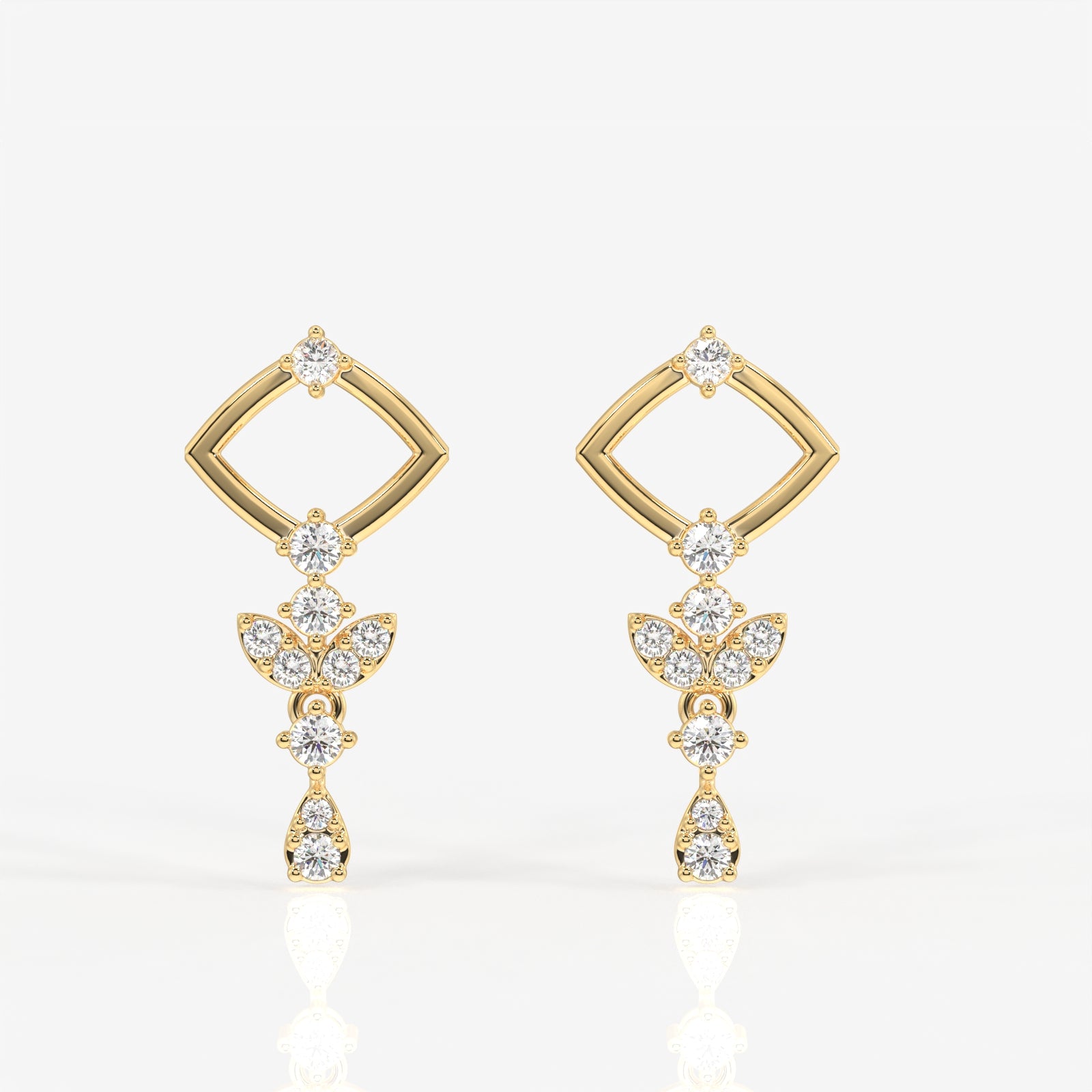
What Is a Lab-Grown Diamond? (And Why Isn't It 'Fake'?)
Before cost, there is a gleaming misconception that needs resolve. Lab-grown diamonds are not “fake,” “simulants,” or “American diamonds.” Those are materials like Cubic Zirconia (CZ) or Moissanite, which are constructed of entirely different chemical arrangements.
As far as the current situation is concerned, a lab-grown diamond is quite simply, a tangible diamond. Period.
It is chemically, physically, and optically the same as a diamond that originated from the depths of the earth. Their point of disparity is only in the origin. One is developed over a time span of billions of years and the other is synthesized within a matter of weeks in a laboratory, albeit under a highly controlled environment, using one of the two methods:
- High Pressure, High Temperature (HPHT): This simulates the earth's mantle.
- Chemical Vapor Deposition (CVD): This "grows" a diamond from a hydrocarbon gas and is spearheaded by India.
As such, lab-grown diamonds are regarded as real diamonds and are graded equally by the world-class gemmological laboratories like the GIA and IGI, using the same 4Cs which include Cut, Colour, Clarity, and Carat.
Decoding the ‘Why’: Factors Causing a Decrease in the Market Value of Lab Diamonds
The most common question we hear is: "If they are the same, then why is the price of lab diamonds lower?" The answer has nothing to do with the quality of the product, but rather the quality of the journey it has to take to get to you.
No Mining, No Scarcity
The primary cost of a mined diamond is the sheer difficulty of its extraction. It takes multi-million-dollar scale operations to get the mining settled. In addition to this, there is also the extraction of a large number of labourers who sift through tons of earth for only a couple of carats. This price is placed due to the model of scarcity.
These lab-grown diamonds sit behind the entire, carbon heavy, mining process. They are made to order on a per diamond basis which removes the ‘scarcity’ condition that has governed diamond pricing for the past 100 years.
Shorter, Clearer Supply Chain
The supply chain of a mined diamond is extremely long and seldom visible. Starting with the mine, it goes to a sight holder, then a cutter of the diamonds, a polisher, a wholesaler, then distributed and finally, sold to a retailer. After each of these steps, a new price is added.
The lab-grown model is much simpler. After the diamond is lab-grown, it moves to the cutter and polisher, and straight to the D2C brand. This simplicity in the supply chain is one of the reason brands like Caratbazaar provide premium quality products without overselling them like traditional jewelers.
The Effect of Technological Advancement
The processes used to make diamonds, like any other processes, are much smoother and cheaper now than in the past. This spiralling down in costs as technology progresses is known as a tech adoption curve. The same applies to diamonds: the more scientific advancements made, the cheaper the man-made diamonds price become.
The “Aha!” Moment: A Real-World Comparison
This isn’t a simple 10 to 15 percent margin of difference. The lab grown diamonds cost has much greater importance than that.
A case in point is the engagement ring.
- Mined diamond. The price for a 1-carat, G-color, VS-clarity round brilliant diamond ranges from ₹4,50,000 to ₹6,00,000 and can go much higher depending on the retailer.
- Lab grown diamond. The typical price for a 1-carat G-color VS-clarity round brilliant lab-grown diamond with a copy of the IGI certification ranges from ₹70,000 to ₹1,10,000.
For approximate 80%-90% less, you are getting the same sparkle, durability, and certification. This isn’t a “cheaper” product; it’s the same product, just offered at a more reasonable and honest price.
To many modern Indian buyers, the contrast in the lab diamonds price is their “aha” moment. They understand that the jewellery of their dreams is attainable without beginning their new life in debt.
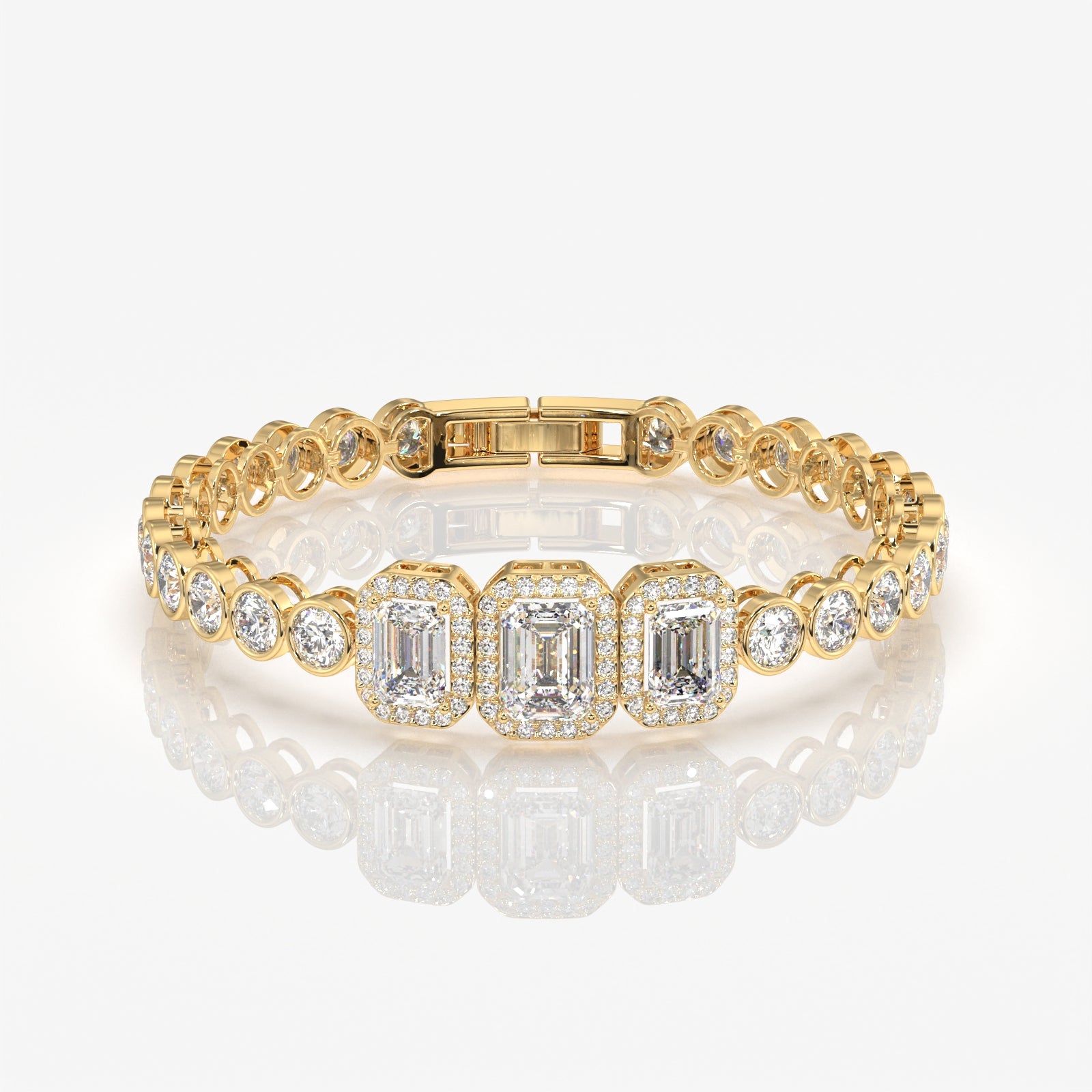
How the lab grown diamond cost Is Changing Indian Spending Patterns
This price disruption is not just introducing a new category of a product; it is a deep root shift in behaviour of Indian jewellery consumers.
The emergence of the 'Solitaire for All'
For decades, the 1-carat (or larger) solitaire ring has been a symbol of elite wealth. It was only accessible to a minute portion of the population. An average young professional in Delhi, Mumbai, or Bangalore had to “settle” for a much smaller stone or a cluster of tiny chips.
The lab grown diamond cost has made the solitaire accessible to the masses. That 1-carat or even 1.5-carat dream ring is no longer an abstract fantasy; it is an achievable goal for a 28-year-old software engineer or a 30-year-old marketing manager.
Even More Attractive Options
Customers can now enjoy much lower man-made diamonds price than previously, which puts them in an advantageous position when compared to customers who only consider purchasing a tiny 0.30-carat diamond carefully mined from the soil. Now, couples have the following choices:
- Go Bigger: 1.0-carat lab diamond. “You can purchase the 1.0-carat lab-grown diamond and you will be really satisfied with your purchase.”
- Go Better: You can “Stick with a 0.50-carat stone but the center stone should be replaced with a platinum 18K gold setting, even 22K gold or platinum.”
- Go for a Set: You can “You can now purchase the 0.50-carat engagement ring, and also the matching wedding band and retain the price for purchase a single mined diamond ring.”
The New Kind of Luxury
Today’s buyer in India is far more enlightened compared to before and is now more aware. They have heard about the scandalous diamonds and have a basic understanding of the atrocities involved with open pit mining. In the past, “the ethical approach to the situation often meant sacrificing.” Now, the “affordable lab diamonds price” makes the ethical choice paradoxically the smarter option. Buyers obtain a stone which is 100% conflict-free and is also eco-friendly and they save money. It is a situation in which all the parties involved are in agreement.
A New Market for Self-Gifting and Occasion Wear
Long-term, the most critical shift is in how diamonds are bought. A pair of diamond studs is ₹1,00,000. That’s a ‘once in a lifetime’ gift. A pair of identical, IGI certified lab grown diamond studs, from a brand like Caratbazaar, is ₹15,000. That’s an accessible luxury.
Self-gifting is exploding. Women are buying diamond pendant, bracelet, and earrings sets to ‘celebrate’ a promotion, a birthday, or just because. Diamonds are transitioning from the wedding vault to the everyday wardrobe.
The Future is Transparent, Accessible and Certified
Online-first brands like Caratbazaar understand that the modern buyer desires more than a good price. They want transparency.
This model includes:
- The lab grown diamond that is economically accessible.
- Quality that is Certified: Each diamond is IGI or GIA certified.
- Purity that is Assured: The gold or silver settings are Hallmarked BIS, assuring the metal is as real as the stone.
- Customization: The option to design your own piece, which was bespoke and luxurious, is now standard.
To the future of Indian fine jewellery is more progressive than it is replacement. It is about providing an option. The lab grown diamond cost has broken the old monopoly and empowered the most pivotal person in the transaction: you, the consumer.
The decision is clear; smart, ethical and accessible luxury is what Indian buyers have opted for.